The first time I tried Block Blast , I genuinely thought it would be one of those simple browser games I play for a couple minutes. Drag blocks, fill rows, clear them, repeat. Easy, right?
Then the board started looking… full. Not “almost full,” but that annoying kind of full where you realize you’ve accidentally committed your future self to a bunch of awkward placements. I’d hover over a piece like it was a delicate plant, tell myself I had plenty of space, and then place it a little too quickly. A few moves later, I’d be staring at a grid that felt one unlucky corner away from disaster.
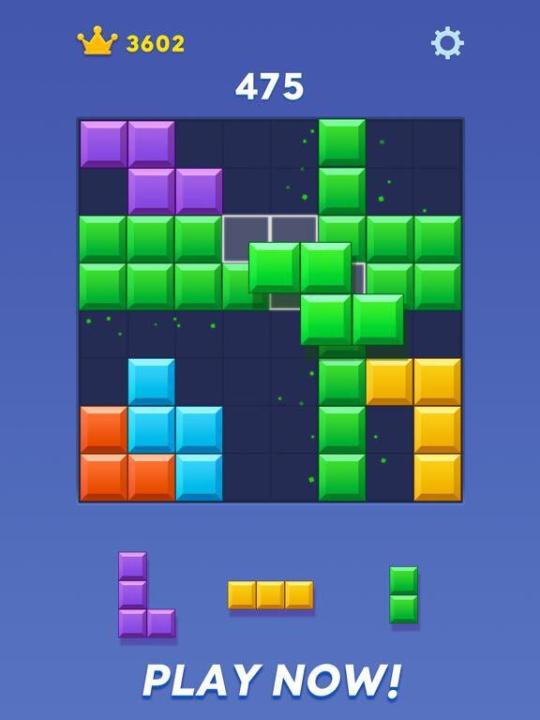
At a glance, Block Blast is a block placement puzzle game. You get a set of block shapes, drag them onto the board, and if you fill a full horizontal row or vertical column, those cells clear. What caught me off guard is that it doesn’t use falling pieces. There’s no automatic drop to save you, no “just react” moment. It’s on you to decide where each piece goes, because once it’s placed, it’s there.
And pieces can’t be rotated. That’s a big deal. My brain kept expecting the classic “rotate to fit” option from other block games, and I’d sometimes make a move that felt obvious—until I remembered the orientation I was stuck with. That one little limitation turned a casual puzzle into something way more thoughtful than I expected.
I also learned that the game doesn’t just punish you for filling too much—it punishes you for filling the wrong kinds of space. Small isolated gaps can become almost impossible to patch later, especially when your remaining shapes don’t match what that gap wants. So while it’s tempting to chase quick clears, I started realizing the real win condition is keeping bigger open areas available.
After a few rounds, I started noticing something really satisfying: sometimes a single placement clears multiple rows or columns at once. The first time that happened, I honestly stopped moving for a second like, “Wait… how did that all line up?”
Those moments are dangerous, too, because they make you feel like you’ve got it. Then you make a placement that looks fine in the moment, only to discover you created an awkward little pocket that you can’t fill cleanly later. That’s when the puzzle turns into a planning game.
If you can think a couple moves ahead—looking at the set of available pieces, not just the one you’re holding—it gets dramatically easier to avoid trapping yourself. I definitely didn’t do that at first. In my earliest games, I’d see an easy placement and assume that was the correct play. It rarely was. Usually, it was just the play that delayed the problem.
My biggest mistake was prioritizing “clearing now” over “staying flexible.” I’d place a block in a way that almost completed something, then suddenly I’d have these narrow spaces I couldn’t reach again with the remaining shapes.
Another mistake: I’d treat the available pieces like they were unrelated. The game gives you a set, and I learned you have to consider them as a group before you commit to the first move. What helped me was literally pausing and asking: If I place this here, what kind of space am I leaving for the next few pieces?
Also, since there’s no countdown timer, I don’t feel rushed. That’s great, but it also means I sometimes overthink. I’ll admit it—I’ve definitely taken too long trying to “solve” a placement. But even that slower pace taught me that careful positioning beats fast decisions.
One thing I keep coming back to: when I can, I try to keep open areas instead of constantly carving the board into little sections. Bigger spaces give your pieces more landing options.
And if I see myself about to create an awkward gap—like a tiny off-angle pocket—I usually try to back up mentally. That gap might look removable for one move, but the real question is whether my upcoming pieces can actually fill it without wasting clears.
Block Blast is the kind of online puzzle game that starts simple and then quietly sharpens your decision-making. No rotations, no falling pieces, and no timer means you’re always choosing—sometimes confidently, sometimes right before you regret that “obvious” placement.
If you’ve got a few minutes and you like block placement puzzle games, give Block Blast a shot. Play a couple rounds, see if you can keep the board open longer than you think you can, and if you want, tell me how it went—because I’m still chasing that first run where I don’t trap myself.
Comments