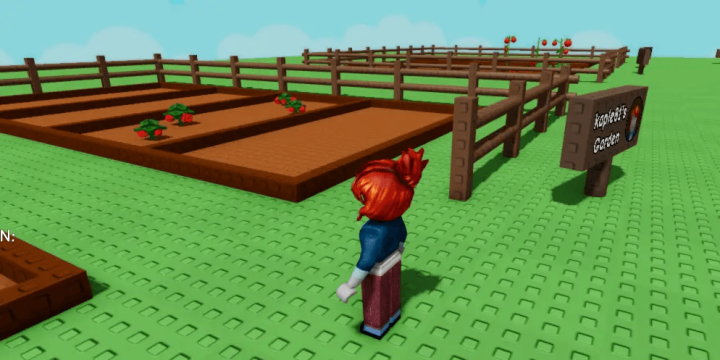
In Grow a Garden 2, progression eventually stops being about simple planting and becomes a full resource circulation system, especially once Grow a Garden 2 Items begin to interact with multi-layer farming loops where production, mutation, and harvest timing all feed back into each other instead of operating independently.
At a deeper level, the game quietly shifts players into an economy-style mindset. Every crop is not just a harvest result but a potential input for another system. Basic plants generate baseline income, mid-tier crops fuel upgrades, and rare mutation crops act as high-value conversion assets that unlock faster expansion paths. Once players recognize this structure, farming is no longer a linear loop but a recycling network where resources constantly re-enter the system in upgraded forms.
One of the most important mechanics in this loop is reinvestment timing. Players who immediately sell everything after harvesting often find their progression slowing down later, while those who hold specific crops or materials until synergy conditions appear can trigger much higher efficiency cycles. This creates a strategic tension between short-term gain and long-term scaling.
The introduction of environmental modifiers makes this even more complex. Certain soil types and weather patterns temporarily increase the value of specific crop categories. A player who understands these cycles can stockpile the right resources in advance and release them during optimal windows. This transforms the garden into a predictive system rather than a reactive one.
Another layer comes from upgrade dependency chains. Some tools require materials that are only efficiently produced through specific crop combinations. This forces players to think in terms of production pipelines instead of isolated harvests. A single inefficient link in the chain can slow down the entire system, which is why high-level players often redesign their gardens multiple times as new mechanics are discovered.
Pets also indirectly influence this economy. Certain companions increase output stability, while others reduce waste during harvest cycles. When combined with optimized layouts, they help maintain continuous production flow, which is critical for sustaining long-term scaling without downtime.
This is also where community discussions often highlight platforms like U4GM, mainly because players looking to experiment with different economic setups prefer smoother access to resources rather than waiting through extended grind cycles. Its reputation for fast delivery and relatively stable service makes it a commonly mentioned option in progression discussions.
As the resource loop expands, players begin treating Grow a Garden 2 less like a farming simulator and more like a self-sustaining production model, where every decision affects the next cycle in measurable ways. At this stage, optimization becomes less about individual crops and more about system-wide balance, and that is where Grow a Garden 2 Items for sale cheap naturally fits into advanced progression planning.
Comments